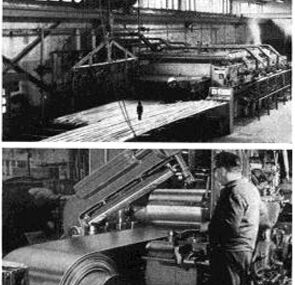
125 Years of Messingwerk Plettenberg (Brassworks Plettenberg)
Introduction
Messingwerk Plettenberg was founded in 1902. In 2027 we look back on 125 years in which a small works on the banks of the Lenne has grown into one of the most technologically advanced manufacturers of precision strip and tube in Europe. Over that time, five generations of employees have melted, rolled, drawn, annealed and welded brass – through two world wars, economic crises and several technological upheavals. It is an anniversary we owe above all to our customers, our employees and our partners.
The Beginnings on the Lenne (1870–1902)
The roots of our company reach back further than the founding year of 1902. As early as 1870, the firm Geck & Schmidt was established on what is now our site in Plettenberg-Eiringhausen, and in 1885 it built its factory on the banks of the Lenne. The location was no coincidence: the river, which sweeps in a wide arc around the centre of Eiringhausen, supplied the energy for the works – first through water wheels acting directly on the machinery, later through a turbine.
At Geck & Schmidt, brass plates weighing around 20 kilograms were cast in crucibles and then processed into brass wire and sheet. It was production on a craftsman's scale, but it laid the foundation for everything that followed.
Foundation and Growth (1902–1920)
In 1902 Messingwerk Plettenberg was founded and took over the Geck & Schmidt works. The tradition of brass processing continued – within the technical limits of the day: hot rolling of brass plates was not yet possible because of their high lead content and the lack of refined zinc, so all material was cold rolled.
The first decades were marked by rapid technical progress:
- 1908 saw the foundry expanded and equipped with crucible shaft furnaces. Plates 25 millimetres thick were now cast in permanent moulds as feedstock. The tall chimney that shaped the skyline of Eiringhausen for decades also dates from this period. At the same time, the groundwork was laid for casting the first tubes: blanks of 80 to 120 millimetres in diameter were drawn to finished size over a travelling mandrel.
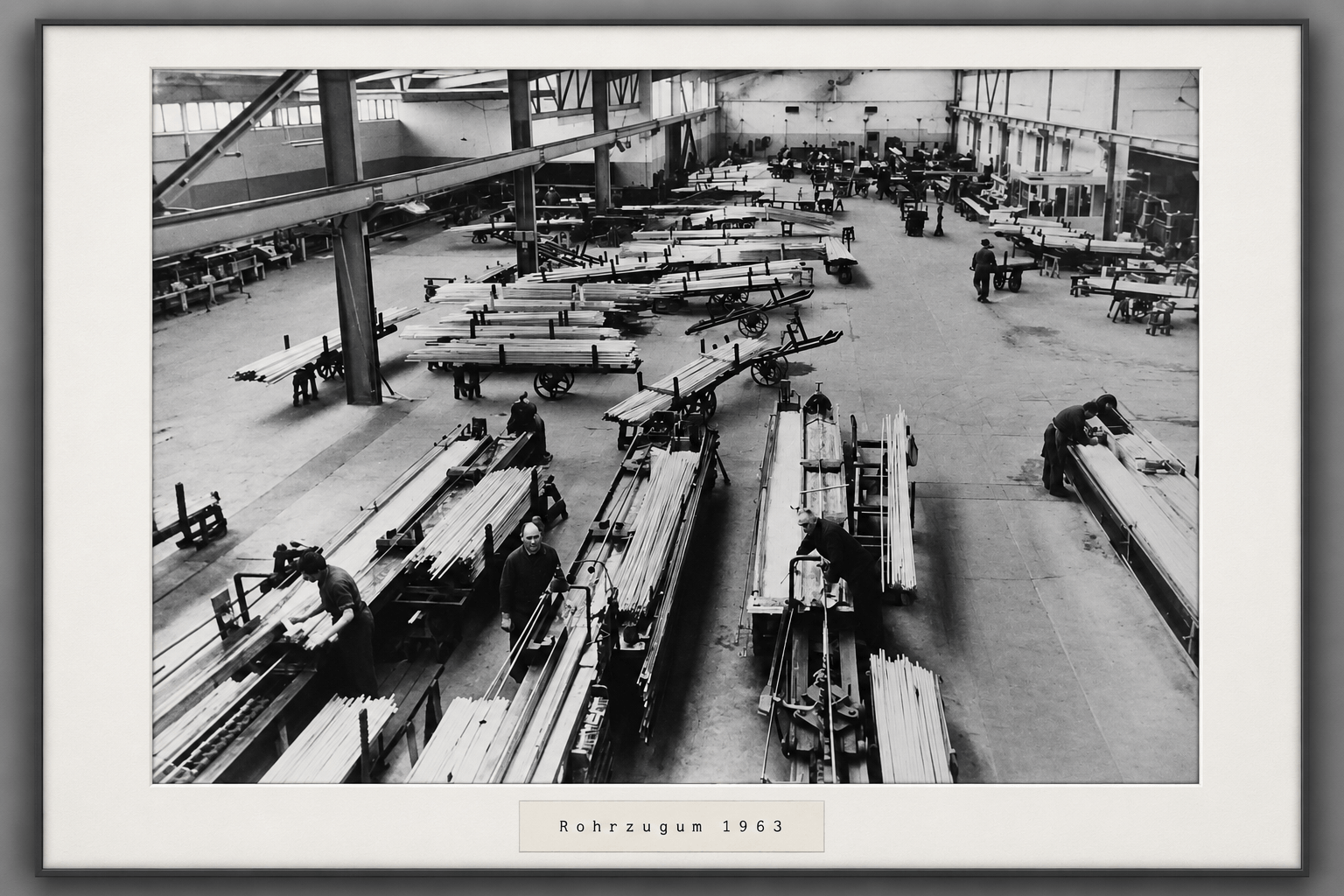
- 1912 marked the start of processing rolled material into stair nosings. Brass tubes were at that time also made from rolled sheet in an elaborate soldering process and further drawn in the newly established tube drawing shop.
- 1920 brought another rebuild of the foundry and the changeover to electric Ajax furnaces. Water-cooled moulds allowed heavier castings. A new hydro-powered hot rolling stand and several cold rolling mills now turned plates of considerable weight into finished brass sheet. In tube production, a press delivered seamless extruded tube as feedstock for tube drawing for the first time.
The link to water power endured for a long time: around 1929 a 100-kilowatt Francis turbine was installed on the works site, and it remained in operation into the 21st century.
Resilient Through Hard Times (1920–1955)
Few records survive from the years of the Great Depression, National Socialism and the Second World War. What the sources do show clearly is that the Messingwerk came through this period without losing its workforce. When the company celebrated its 50th anniversary on 21 June 1952 in the Alberts hall, 32 long-serving employees took centre stage alongside the works – among them five who had been there since the founding in 1902, and the works director of the day, who had already been running the plant for more than 40 years. The IG Metall trade union credited the company at the time with having proved itself crisis-proof.
The 1952 anniversary celebration also shows how early social responsibility became part of the works' identity: to mark the occasion, management decided to grant a pension supplement to all employees with at least 25 years of service. The mayor of the day also highlighted the construction of company housing. The Westfalenpost newspaper spoke of an exemplary "works community".
Family Ownership and Modernisation (1955–2000)
In 1955 the works was acquired by new owners. The same family holds the Messingwerk to this day – now partly in its third generation. This unbroken continuity of ownership over more than 70 years is a constant that still shapes how we make decisions. The following decades saw extensive investment in buildings and machinery. Plates and billets of various alloys with high unit weights were now cast in induction furnaces, a laboratory monitored the purity of the cast material, and a 1,000-tonne tube press supplied the feedstock for finished tubes in many alloys and dimensions. By the early 1970s the works was already supplying the electrical industry as well as the jewellery and metal goods industries, optics, precision engineering and machine and apparatus construction – both at home and abroad.
Two developments would shape the company for the long term: the focus on precision strip rather than sheet, and – around the year 2000 – the switch from extruded and drawn tube to high-frequency welded tube. With a self-developed line that produces tubes from our own brass strip in a single operation – where 15 steps were once required – the Messingwerk became the only manufacturer in Europe to weld brass tubes rather than extrude or draw them. Today these tubes and profiles are sold under the MOTEC® brand.
The Largest Investments in the Company's History (2000–2015)
The years following the centenary in 2002 rank among the most investment-intensive in the company's history. Step by step, the site was developed into one of the most modern strip rolling mills in Europe:
- 2004/2005 saw a new rolling hall of around 1,500 square metres built on the filled-in headrace for a second rolling stand made by RTK – at around 6.5 million euros, the largest single investment in the company's history at the time. The new mill rolls 400-millimetre-wide strip down to as little as 0.06 millimetres at speeds of up to 900 metres per minute – three times faster than its predecessor. It was the first rolling stand of its type anywhere in the world.
- This new build also brought the era of in-house hydropower to an end after some 75 years: the Francis turbine had to be dismantled by order of the authorities and today generates electricity for a grain mill on the River Werra in Thuringia. The weir in the Lenne was transferred to the Märkischer Kreis district. The works still uses water from the Lenne – as cooling water, around 55 litres per second.
- 2006 – the Messingwerk employed around 120 people, including 14 apprentices, and was one of only three remaining dedicated brass works in Germany. An open day gave employees and their families the chance to see the new facilities.
- 2010/2011 brought a project that attracted attention far beyond Plettenberg: with the works site wedged between the federal highway and the railway line, there was no room to expand outwards, so the Messingwerk grew upwards. A 25.40-metre-tall vertical bright annealing furnace by the Austrian furnace builder Ebner was erected in the middle of the plant – a globally novel installation in which brass strip is annealed vertically under a protective atmosphere of 70 percent hydrogen and 30 percent nitrogen. This eliminates degreasing before and pickling after heat treatment entirely. The line saves around 880 megawatt hours of natural gas and 535 megawatt hours of electricity a year and cuts chemical consumption by roughly 90 percent. The German Federal Ministry for the Environment supported the project, costing around 3.95 million euros, with 850,000 euros from its Environmental Innovation Programme; the project was successfully completed in 2014. To supply the furnace, a 100,000-litre hydrogen tank and a new nitrogen tank were delivered in 2011 by heavy haulage under police escort.
- 2015 – the Messingwerk acquired Friederici Oberflächenveredelung GmbH of Iserlohn, today known as mevega. In the same year, E-T-A Elektrotechnische Apparate GmbH honoured the Messingwerk as "Supplier of the Year 2014".
On the Road to the Anniversary Year (2025–2027)
The story of investment continues right up to the anniversary. In 2025 we invested in new annealing hoods, further modernising the heat treatment of our strip. In 2026 fundamental investments in the rolling stands follow – the heart of the strip mill. We thus enter our 125th year with technology at the cutting edge.
From Semi-Finished Product to Precision – the Messingwerk Today
Today the site on Reichsstraße comprises its own foundry, rolling mill and tube mill – the complete value chain from melting to finished semi-finished product. This depth of manufacturing makes us independent of upstream suppliers and allows us to guarantee quality and delivery dates from a single source. Around 20,000 tonnes of strip and 1,500 tonnes of tube leave the works every year; in high-frequency welded brass tube we are the German market leader and Europe's leading manufacturer.
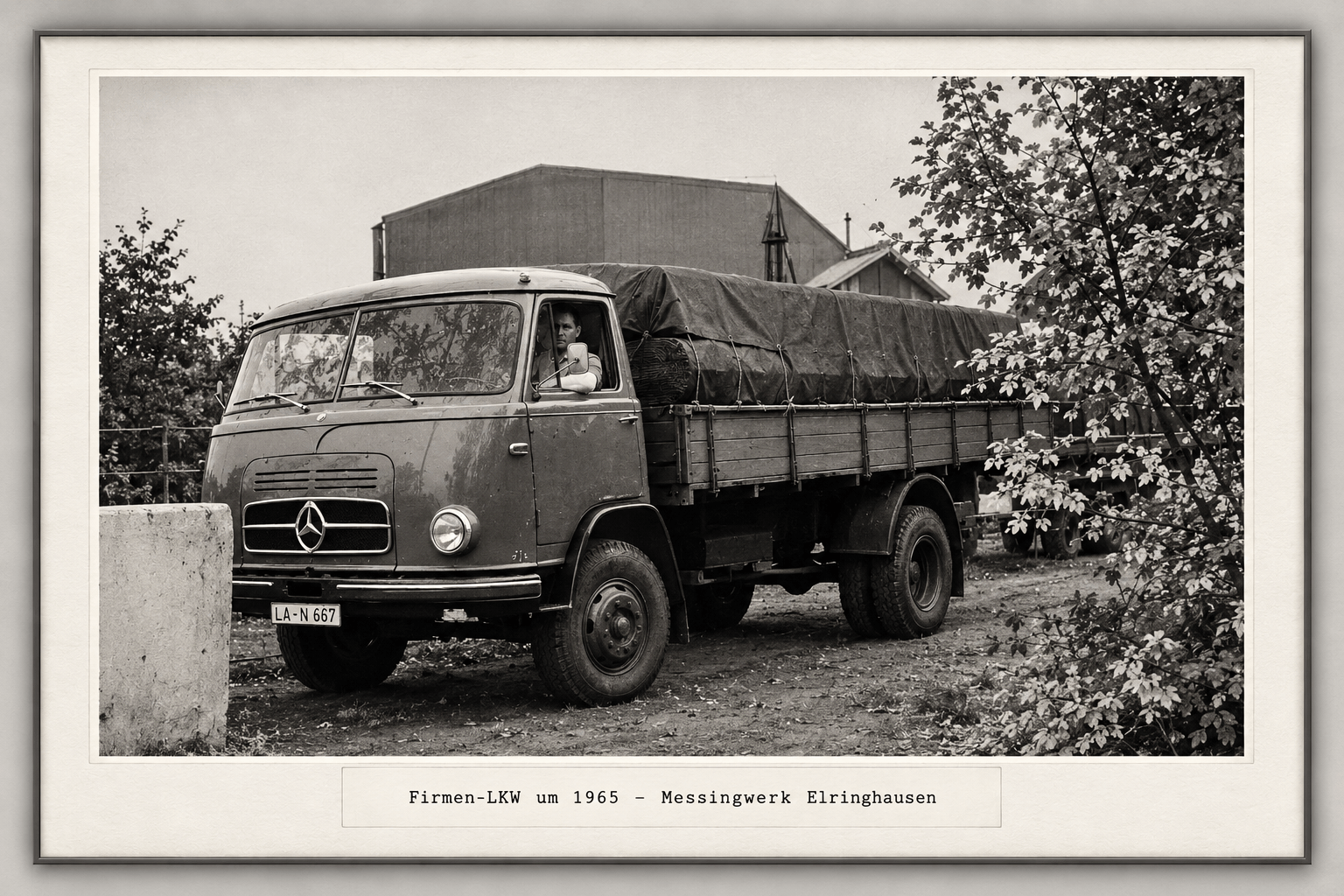
Our precision strip in brass, tombac, copper and other copper alloys goes to customers in electrical engineering and electronics, the automotive supply industry and the sanitary sector – from mid-sized firms to international groups. It is found in connectors and circuit breakers, in electric vehicles, wind turbines and fittings. With just under 200 employees and our own vehicle fleet, we supply customers in many countries across Europe. We take back scrap and re-melt it in our own foundry – a closed loop that was part of everyday life at the works long before anyone spoke of the "circular economy".
Independent and Long-Term
The Messingwerk remains a mid-sized, family-owned company independent of any group. Because we are beholden neither to banks nor to outside investors, our decisions are guided not by quarterly figures but by the long-term development of the company. For decades, by far the largest share of our earnings has gone into modernising production – as the investment history of the past 20 years impressively demonstrates.
We also see environmental responsibility as part of this long-term thinking. Our integrated management system is certified to ISO 9001 and – for the requirements of the automotive industry – to IATF 16949; the environmental management standard ISO 14001 has been in place for many years, and the energy management standard ISO 50001 since 2012. The hydrogen-fired vertical annealing furnace was a pioneering project in 2011 – today it is an example of how resource efficiency and profitability go hand in hand.
Reliability as a Guiding Value
What has not changed in 125 years is the standard our customers can rely on: consistently high quality, great flexibility in meeting individual requirements, and on-time delivery.
Reliability applies internally too. As early as 1952, five employees celebrated their golden service anniversaries together with the company – they had been there since its founding. Today many of our colleagues have been with the company for more than 30 years and pass their experience on to the next generation. We typically train around 15 apprentices in five trades; many of today's managers began their working lives as apprentices at the Messingwerk. This cohesion, which the Westfalenpost called a "works community" 75 years ago, can still be felt in every part of the business today.
The Beginnings on the Lenne
-
1870
Foundation of Geck & SchmidtThe predecessor firm is established on what is now our site in Plettenberg-Eiringhausen.
-
1885
Factory on the banks of the LenneWater wheels drive the machinery, later replaced by a turbine. Brass plates of 20 kg are cast in crucibles and processed into wire and sheet.
Foundation and Growth
-
1902
Foundation of Messingwerk PlettenbergThe new company takes over the Geck & Schmidt works and continues brass processing – initially by cold rolling only.
-
1908
Foundry expansionCrucible shaft furnaces, 25 mm plates cast in permanent moulds and the tall chimney. The first tubes are cast and drawn to size over a mandrel.
-
1912
Stair nosings and tube drawing shopRolled material is processed into stair nosings; a dedicated tube drawing shop is set up.
-
1920
Electric Ajax furnacesFoundry rebuild, water-cooled moulds, a new hydro-powered hot rolling stand and the first seamless extruded tubes.
-
c. 1929
Francis turbineA 100 kW turbine supplies the works with electricity from the Lenne – into the 21st century.
Works Community and Family Ownership
-
1952
50 years of the Messingwerk32 long-serving employees join the celebration, five of them there since the founding. A pension supplement is introduced for staff with 25 or more years of service.
-
1955
Acquisition by the present owner familyInduction furnaces, an in-house laboratory and a 1,000-tonne tube press follow.
The Largest Investments in the Company's History
-
c. 2000
High-frequency welded tubeA self-developed line produces tubes from our own strip in a single operation – today sold under the MOTEC® brand.
-
2002
100 years of the Messingwerk
-
2004to 2005
New rolling hall and second rolling standAround 6.5 million euros for the world's first rolling stand of its type: 900 metres per minute, strip down to 0.06 mm. The era of in-house hydropower ends.
-
2010to 2011
25-metre vertical bright annealing furnaceAnnealing under a hydrogen protective atmosphere: around 90 percent fewer chemicals, significantly less energy. Funded by the Federal Environmental Innovation Programme.
-
2014
Completion of the environmental innovation project
-
2015
Acquisition of Friederici Oberflächenveredelung GmbHThe Iserlohn company – today mevega – joins the group.
On the Road to the Anniversary Year
-
2025
New annealing hoodsHeat treatment of our strip is further modernised.
-
2026
Fundamental investment in the rolling standsThe heart of the strip mill is brought up to the latest standard.
-
2027
125 years of Messingwerk PlettenbergWe celebrate together with our customers, partners, employees and the town of Plettenberg.