
Genuine closed-loop recycling: foundry, rolling mill and tube mill on one site
Many semi-finished product manufacturers buy in their feedstock. We melt our own. With our own foundry in Plettenberg we cover the complete value chain on a single site – from melting, casting and rolling to the finished precision strip and tube. This makes us independent of upstream suppliers, and makes our customers less exposed to supply chain fluctuations.
The (closed) loop in four stages
The graphic shows the sequence from foundry, rolling and tube mill, delivery and your production, plus the take-back of stamping scrap. The wording used in the graphic, for reference:
- Stage 1 – Foundry, melting & casting: Electric furnaces melt the material down. It is conditioned to the correct alloy and cast into pre-rolled strip in a continuous process.
- Stage 2 – Rolling & tube mill, forming: The pre-rolled strip becomes precision strip and tube in the alloy and dimensions you need.
- Stage 3 – Delivery, our own fleet: The finished material reaches you on time – across Europe, largely with our own fleet.
- Stage 4 – Your production, stamping & forming: You process strip and tube into your components. Stamping scrap arises in the process.
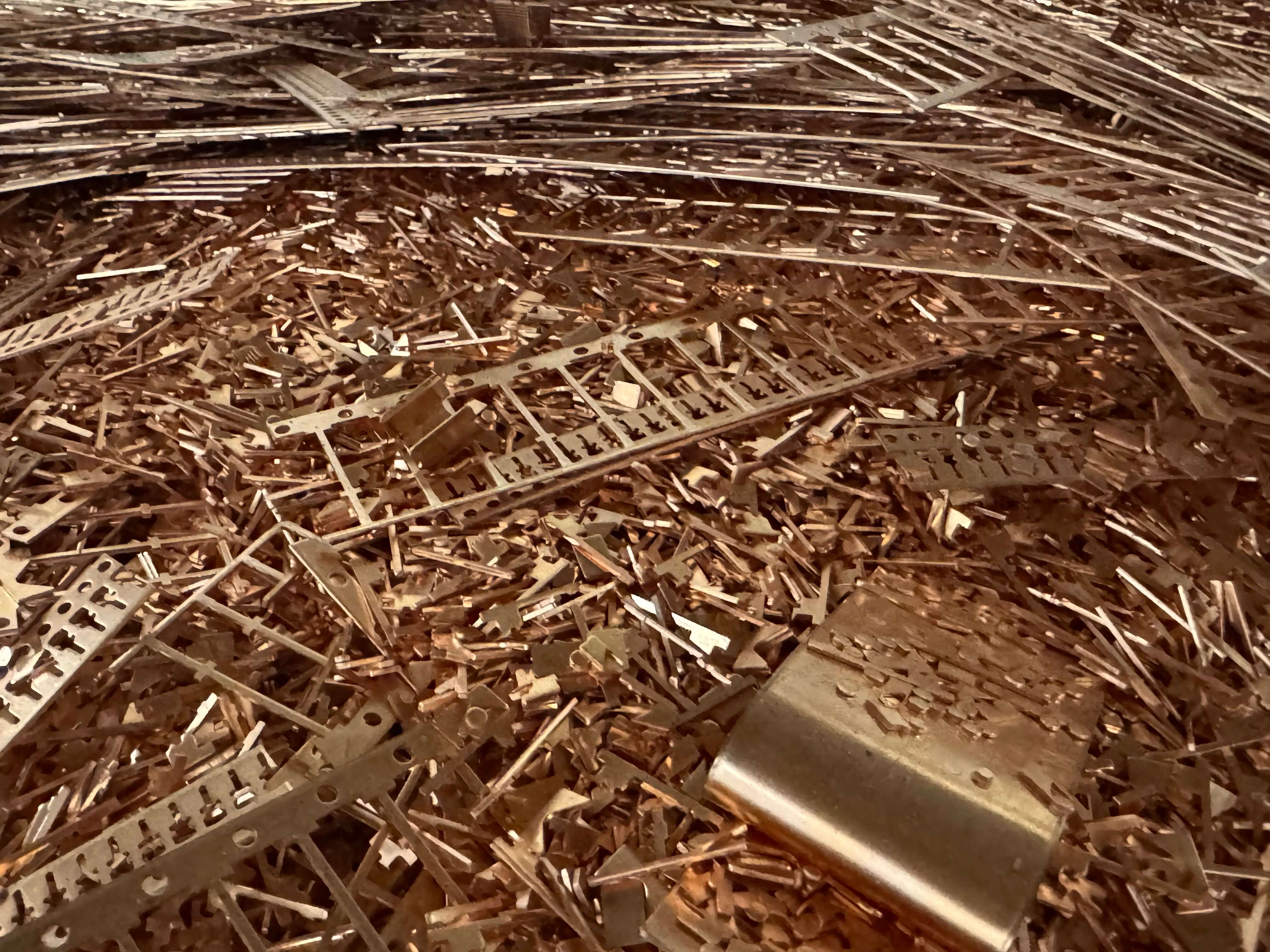
- Take-back: Your stamping scrap returns to Plettenberg on our own trucks and goes straight back into stage 1. Because our vehicles are loaded on the return leg, we avoid empty runs.
-
STAGE 1
Foundry
Melting & castingElectric furnaces melt the material down. It is conditioned to the correct alloy and cast into pre-rolled strip in a continuous process.
-
STAGE 2
Rolling & tube mill
FormingThe pre-rolled strip becomes precision strip and tube in the alloy and dimensions you need.
-
STAGE 3
Delivery
Our own fleetThe finished material reaches you on time – across Europe, largely with our own fleet.
-
STAGE 4
Your production
Stamping & formingYou process strip and tube into your components. Stamping scrap arises in the process.
Take-back: Your stamping scrap returns to Plettenberg on our own trucks and goes straight back into stage 1. Because our vehicles are loaded on the return leg, we avoid empty runs.
Schematic representation of the material loop between Messingwerk Plettenberg and your production.
Why short routes make the difference
In conventional recycling via scrap dealers and smelters, material often travels hundreds of kilometres before it returns to the processor as new semi-finished product. With us, everything stays in one place. That saves transport, reduces emissions and shortens the time until your material is available again.
Metal flows in the production process
A large share of the metal in our furnaces has already been in circulation: loop material from our own production and stamping scrap taken back from our customers goes into the same melt as purchased feedstock.

- Loop material and returns
- Purchased feedstock and main flow
- Schematic representation; the flow widths are not to scale.

Recycling saves energy
Metal that we remelt rather than win anew saves the entire effort of mining, transporting and processing ore. Copper production from secondary material requires no more than 20 percent of the energy of primary production – at identical quality, because copper and its alloys can be recycled again and again without any loss of quality.
And we melt electrically. Our furnaces run on electricity, not on coke or natural gas. The carbon footprint of our production therefore falls in step with the share of renewables in the grid.
Source: Kupferverband e. V. (German Copper Institute), “Recycling” topic page.
The graphic shows the metal flows in the production process and the energy saved through recycling. The wording used, for reference:
Metal flows in the production process A large share of the metal in our furnaces has already been in circulation: loop material from our own production and stamping scrap taken back from our customers goes into the same melt as purchased feedstock.
Recycling saves energy Metal that we remelt rather than win anew saves the entire effort of mining, transporting and processing ore. Copper production from secondary material requires no more than 20 percent of the energy of primary production – at identical quality, because copper and its alloys can be recycled again and again without any loss of quality.
Security of supply in our own hands
Because we melt ourselves, we can deliver even when feedstock becomes scarce on the market. We plan alloy, quantity and delivery date together with you – and can respond to short-notice changes without depending on third parties.
Sustainability as a system
Our foundry operates within our ISO 14001-certified environmental management and ISO 50001-certified energy management systems. Brass and copper can be recycled again and again without loss of quality – a loop we have practised for decades and which matters more today than ever.
Put your stamping scrap back into the loop
Your stamping scrap is not waste, it is feedstock. We take it back, remelt it in our own foundry and turn it into new precision strip and tube – in the alloy and dimensions you need. Collection is usually handled by our own fleet on the return leg from a delivery. Talk to your sales contact or write to vk@messingwerk.de – we will work out quantities, collection intervals and terms together with you.
You may also be interested in